Infographics
Visual resources illustrating the research, data, and policy issues surrounding sex offense laws in Colorado. Click any image to view it full size. Feel free to download and share these resources to help spread awareness.
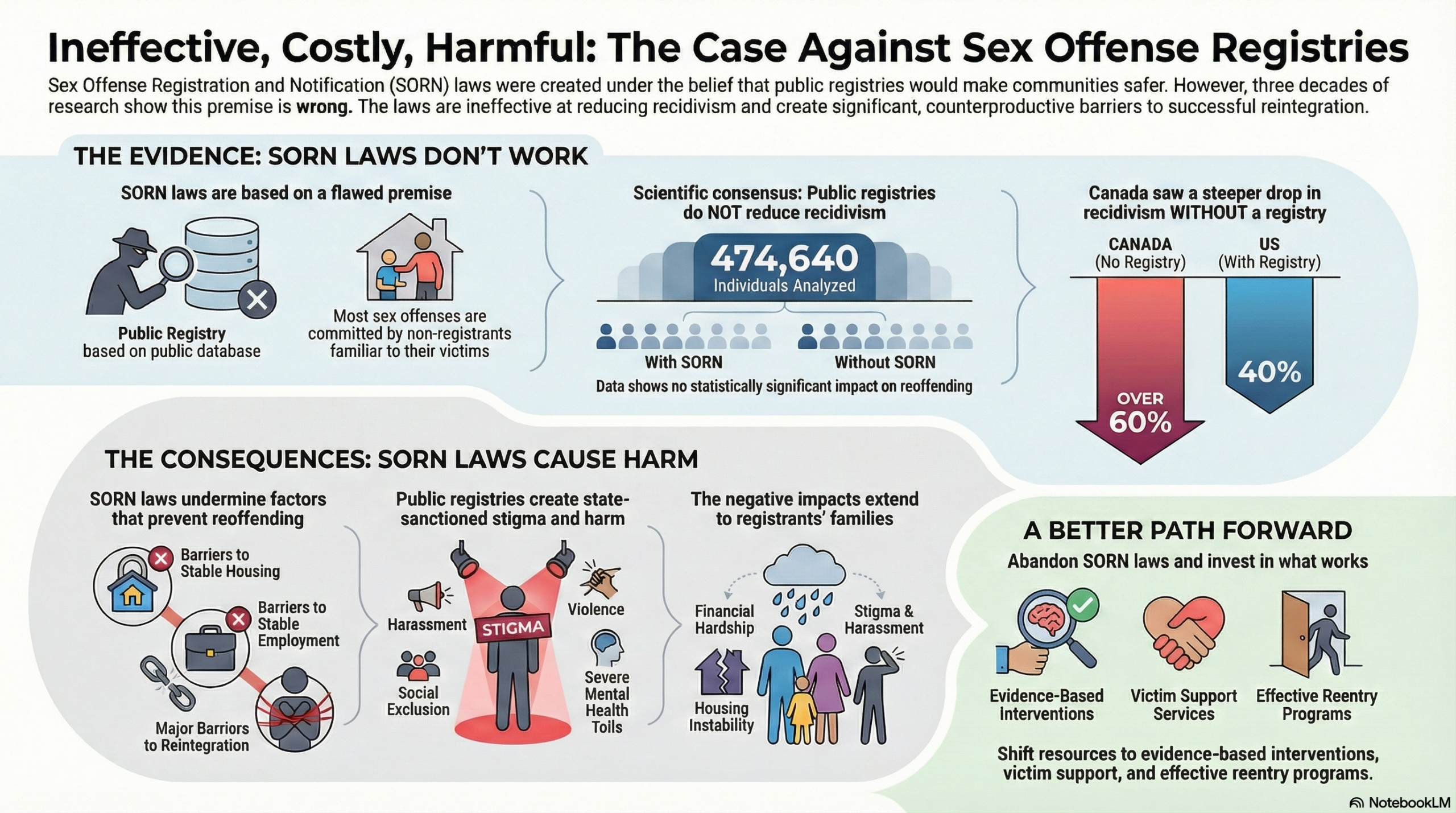
Three decades of research show SORN laws are ineffective at reducing recidivism and create significant, counterproductive barriers to successful reintegration. Examines the flawed premise, the consequences including housing instability and stigma, and a better path forward.
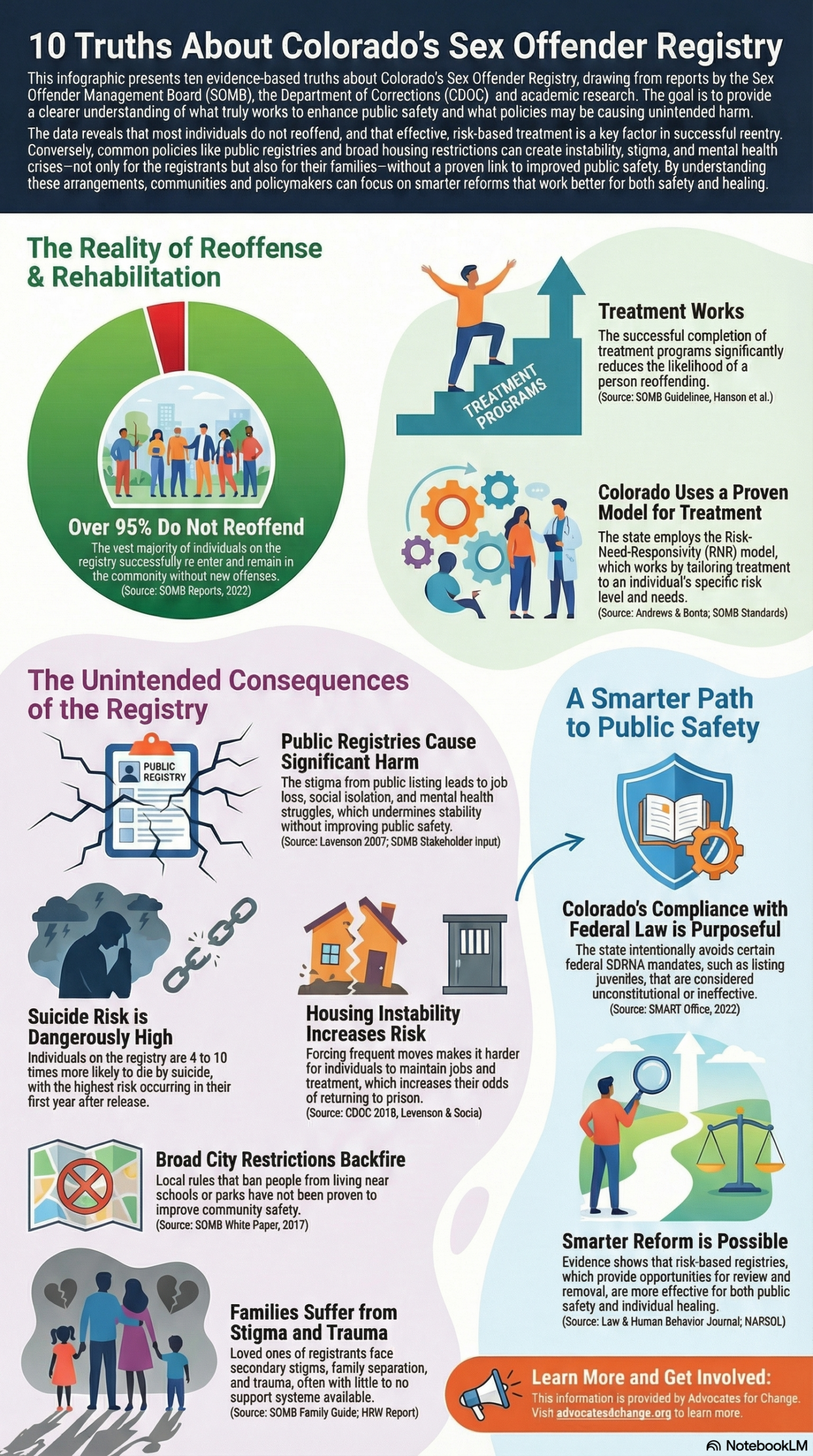
Evidence-based truths about Colorado’s registry drawing from SOMB and DOC reports. Covers reoffense reality (over 95% do not reoffend), treatment effectiveness, unintended consequences including suicide risk, housing instability, and a smarter path to public safety.
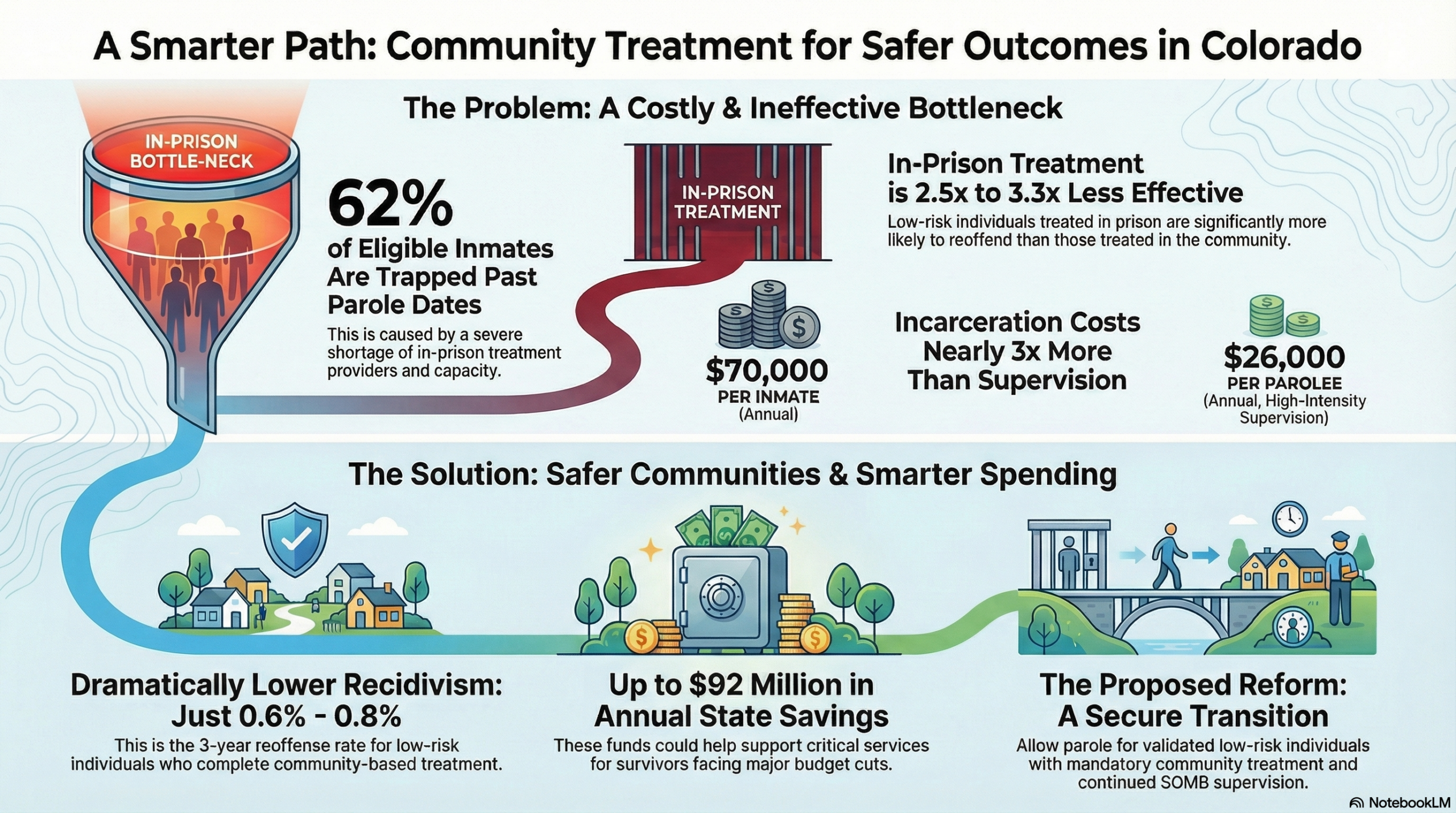
Highlights the costly in-prison treatment bottleneck where 62% of eligible inmates are trapped past parole dates. Shows how community-based treatment dramatically lowers recidivism (0.6%–0.8%) and could save up to $92 million in annual state savings.
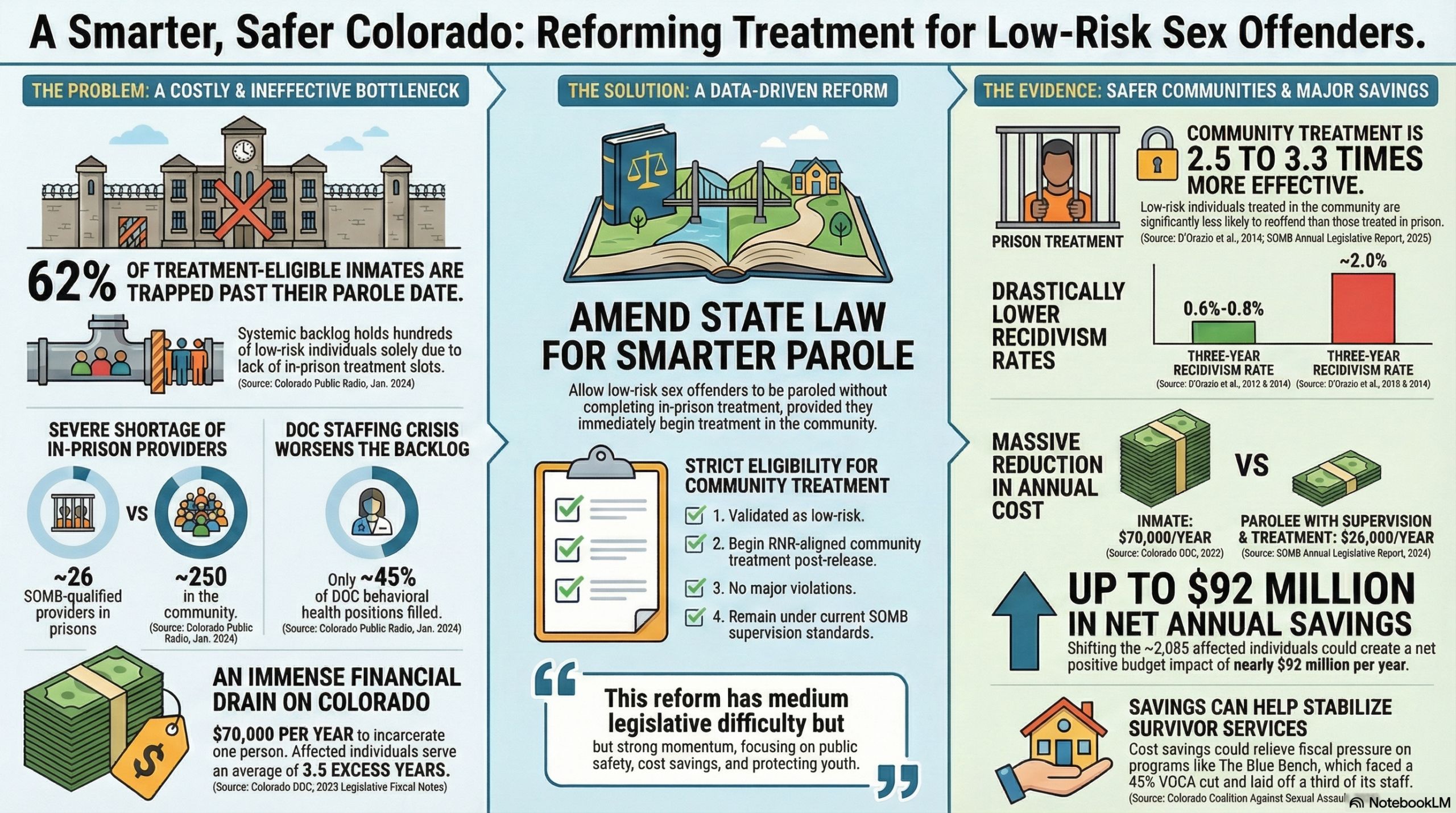
Details the systemic treatment backlog, the proposed reform for smarter parole, and the evidence showing community treatment is 2.5 to 3.3 times more effective than prison treatment. Estimates up to $92 million in net annual savings for Colorado.
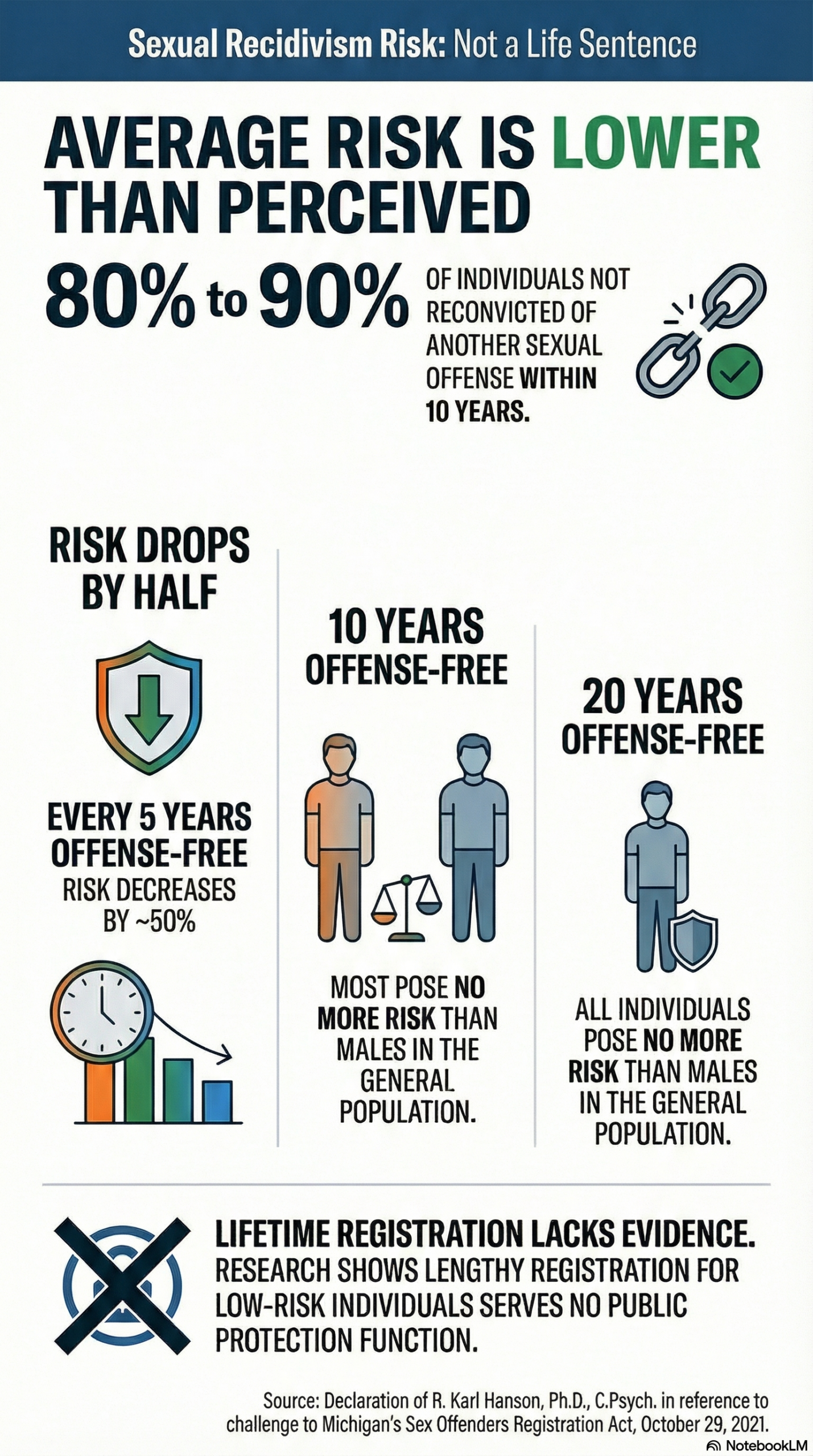
Research shows 80–90% of individuals are not reconvicted of another sexual offense within 10 years. Risk drops by half every 5 offense-free years. After 10 years, most pose no more risk than the general population. Lifetime registration lacks evidence for low-risk individuals.
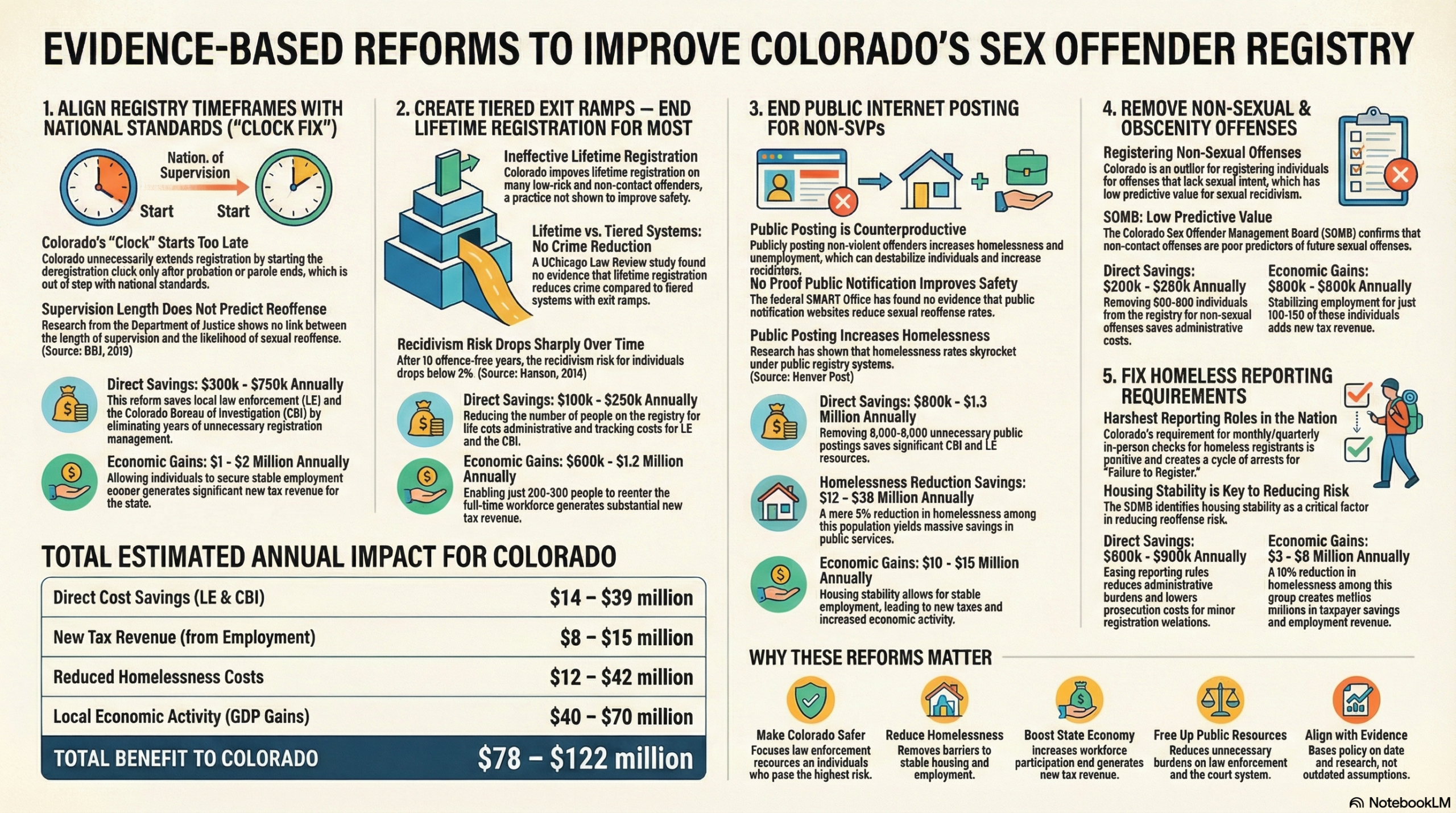
A comprehensive look at five proposed reforms: aligning registry timeframes with national standards, creating tiered exit ramps, ending public internet posting for non-SVPs, removing non-sexual offenses, and fixing homeless reporting requirements. Estimates $78–$122 million total annual benefit to Colorado.
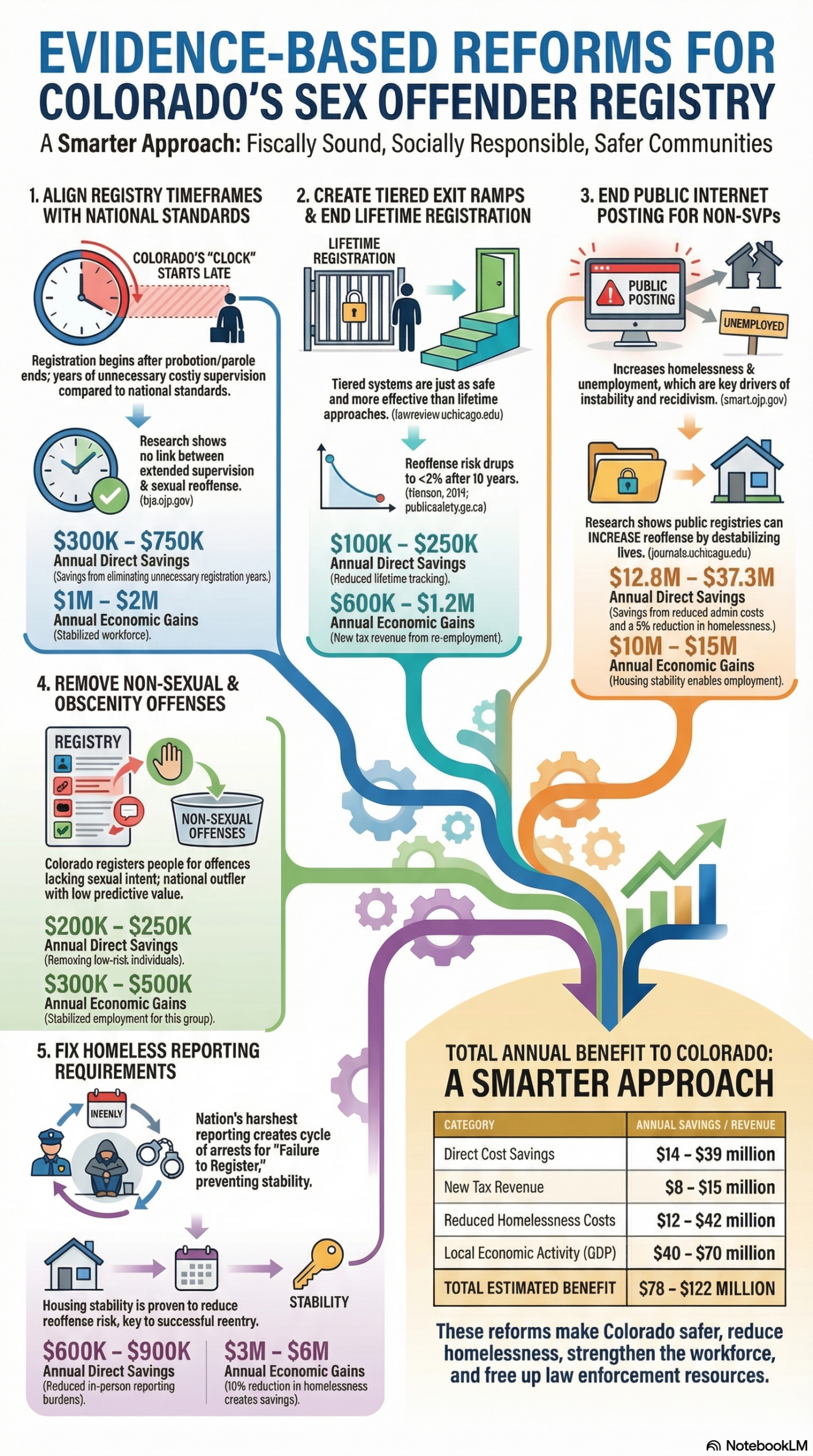
A streamlined overview of the five key evidence-based reforms with projected direct savings and economic gains for each reform area, totaling $78–$122 million in estimated annual benefit to Colorado.
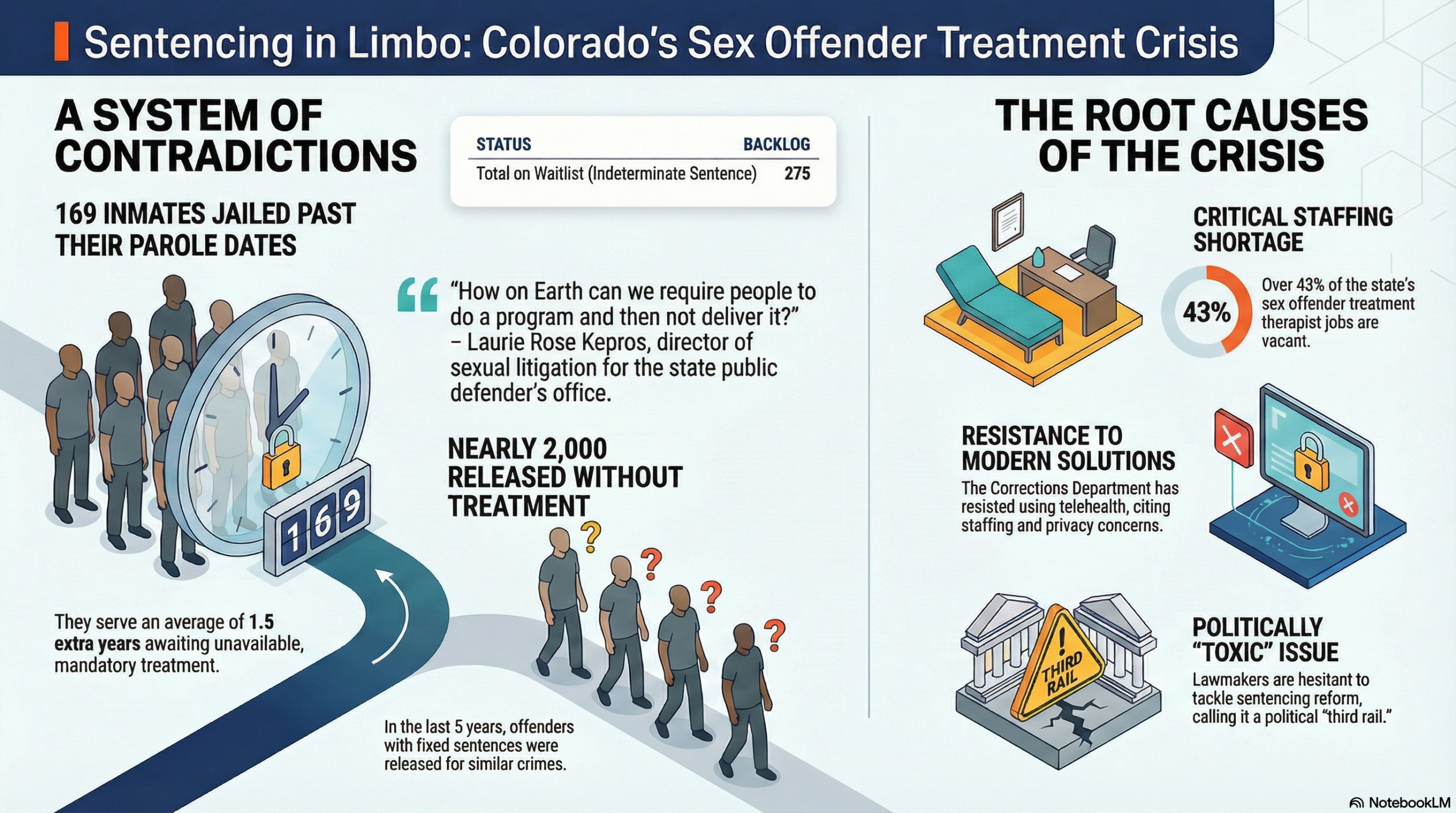
Examines the system of contradictions where 169 inmates are jailed past their parole dates, nearly 2,000 are released without treatment, and root causes including critical staffing shortages (43% therapist vacancies), resistance to modern solutions, and legislative inaction.
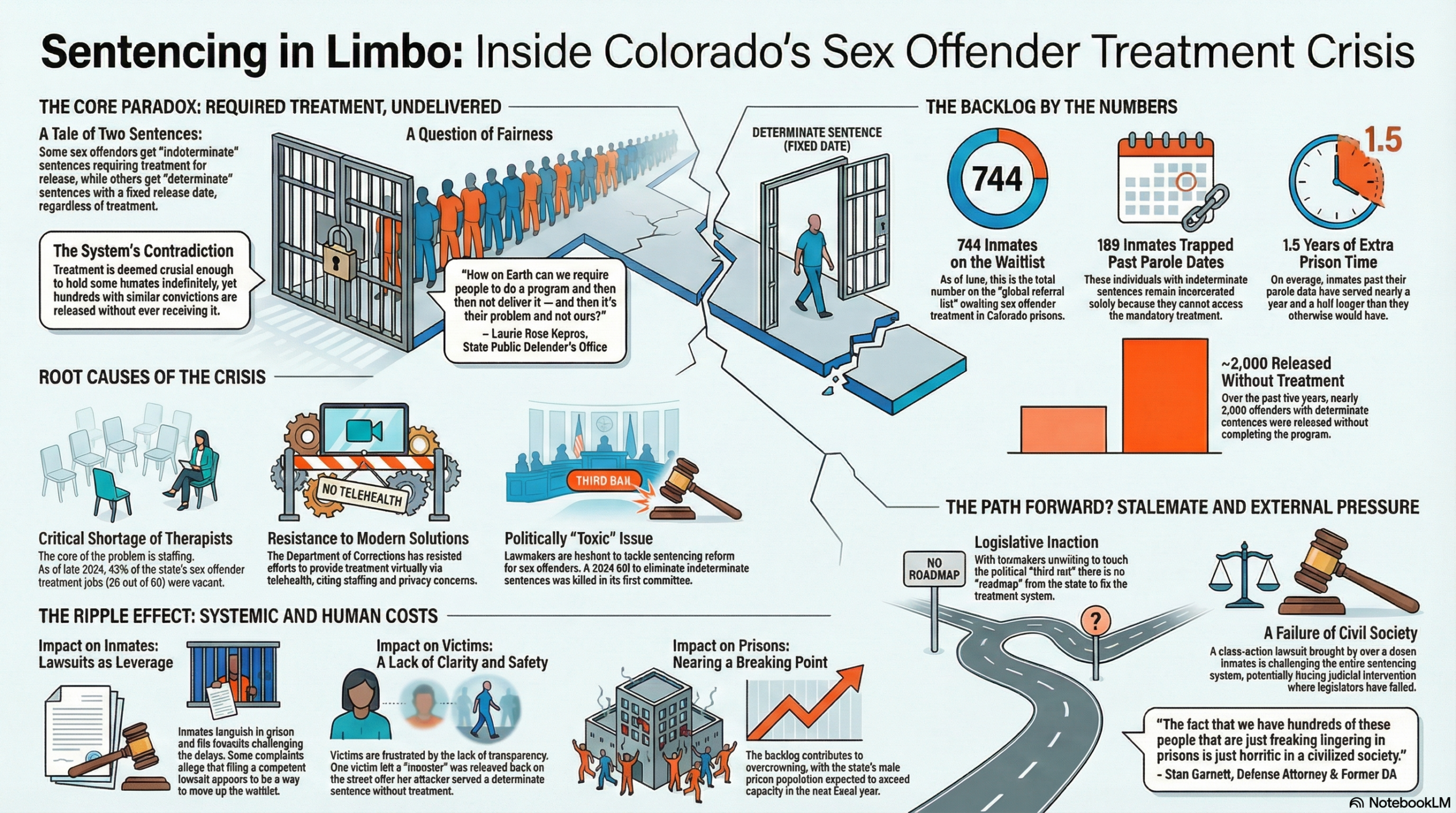
An in-depth examination of the core paradox of required but undelivered treatment. Details the backlog of 744 inmates on the waitlist, 189 trapped past parole dates, the ripple effects on inmates and victims, and the path forward including legal challenges.
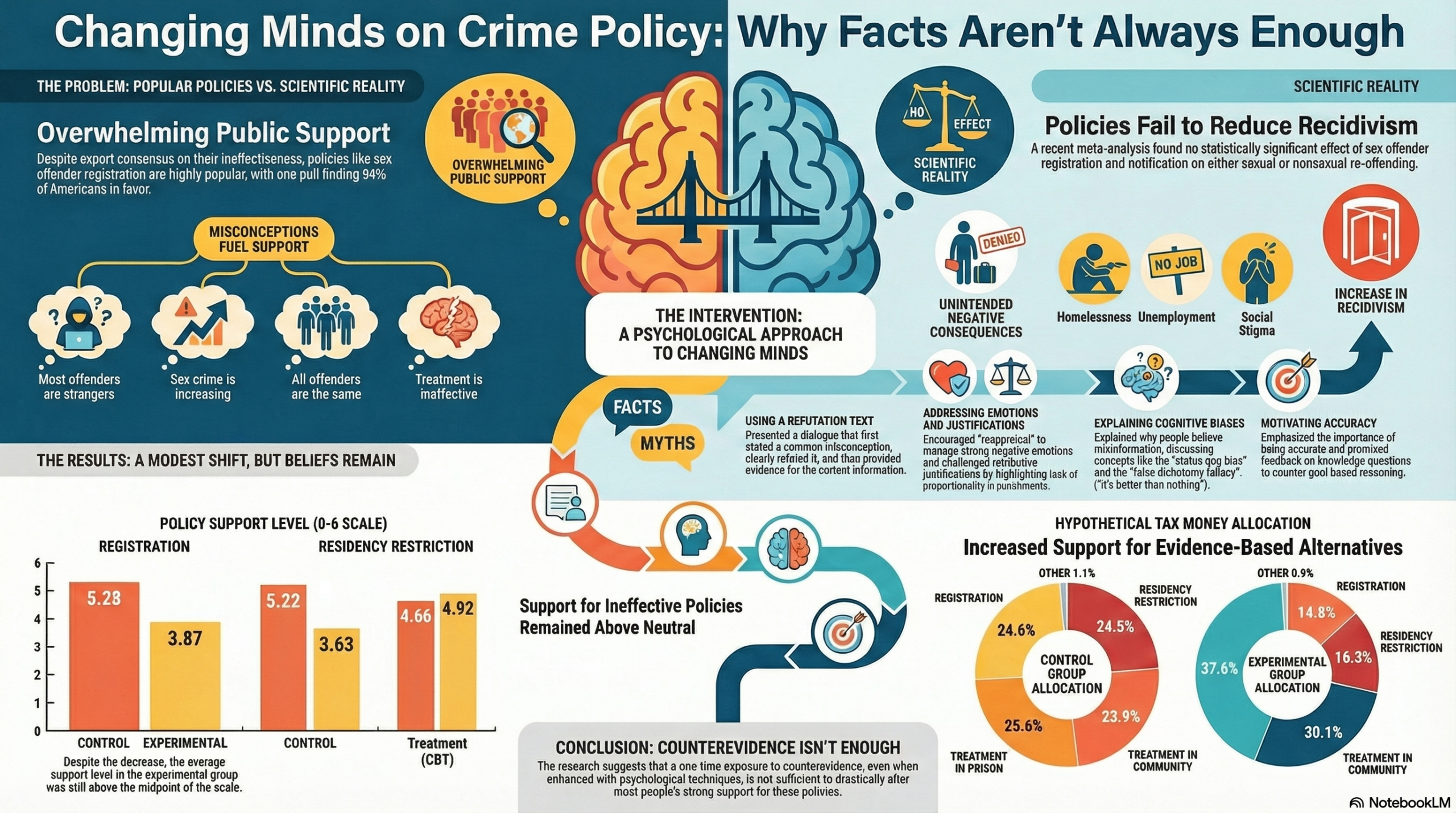
Explores the gap between popular policies and scientific reality. Despite expert consensus on ineffectiveness, sex offender registration enjoys high public support. Examines psychological approaches to changing minds using cognitive behavioral techniques and how counterevidence alone isn’t enough.
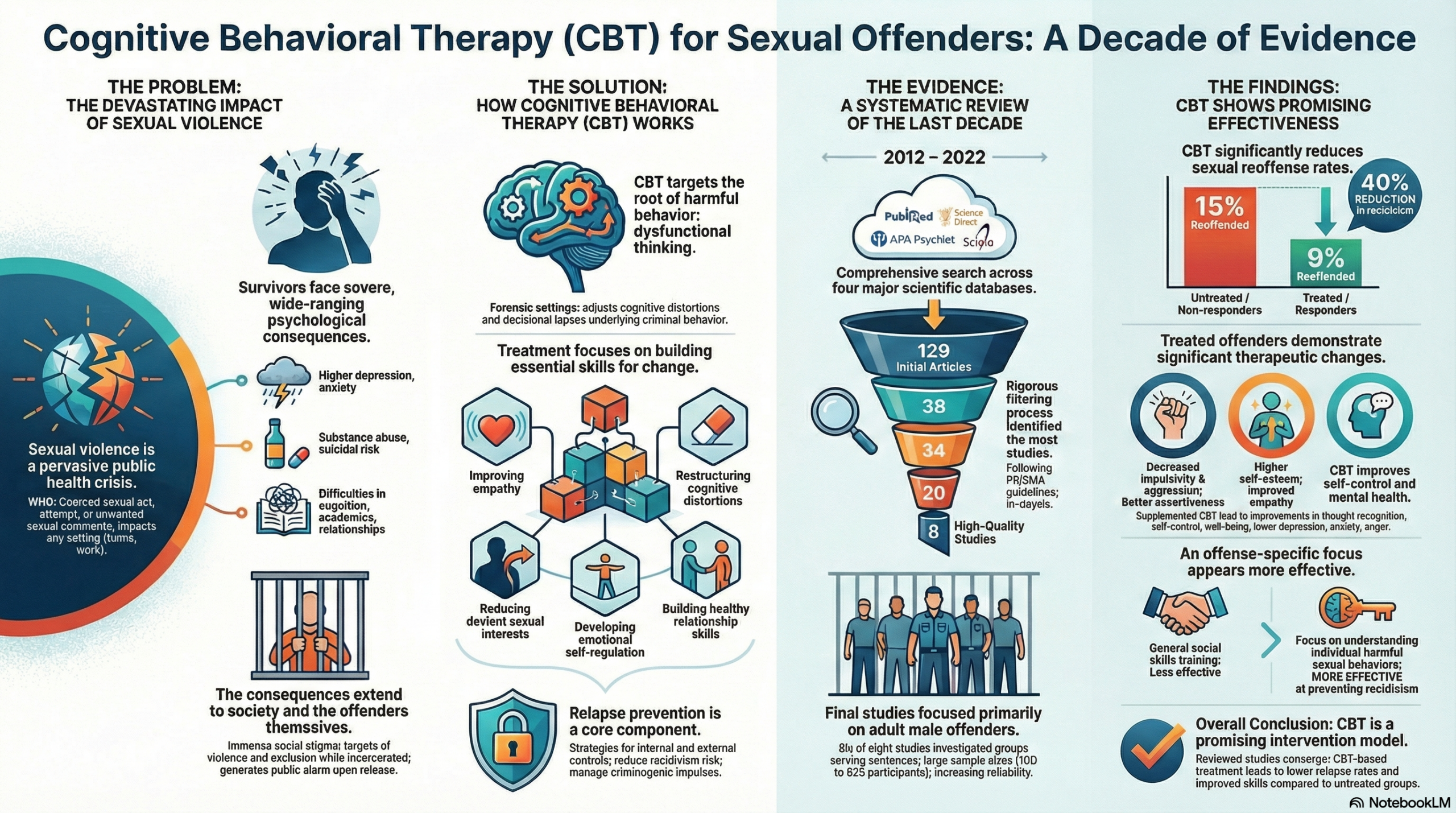
A systematic review of CBT effectiveness from 2012–2022 across 129 initial studies. CBT significantly reduces sexual reoffense rates (15% untreated vs. 9% treated) and demonstrates significant therapeutic changes including improved empathy, self-control, and cognitive restructuring.
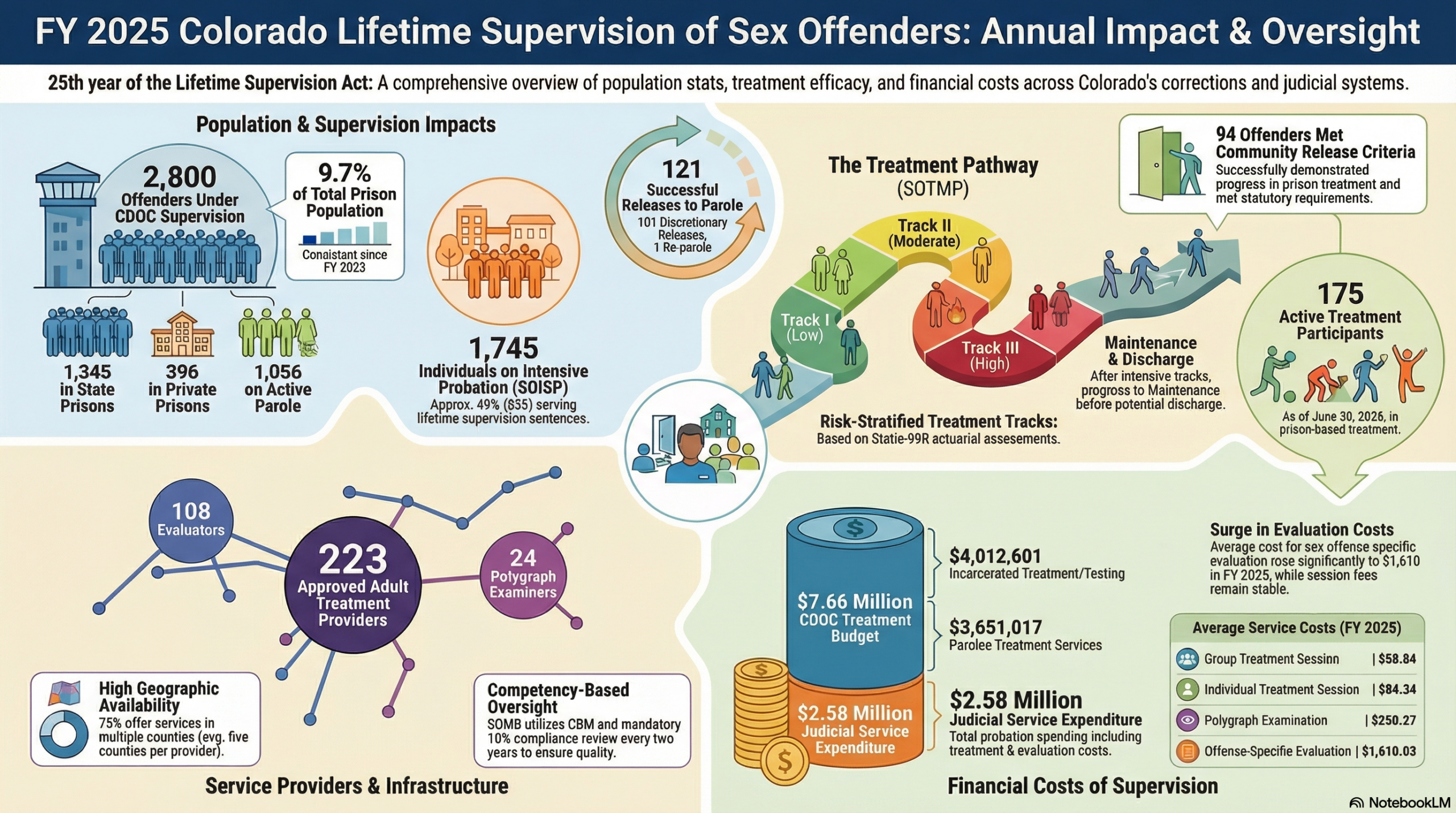
FY 2025 comprehensive overview: 2,800 offenders under CDOC supervision, 1,745 on intensive supervision, treatment pathway tracks, 223 approved treatment providers, evaluation costs, and financial costs of supervision totaling millions in annual expenditure.
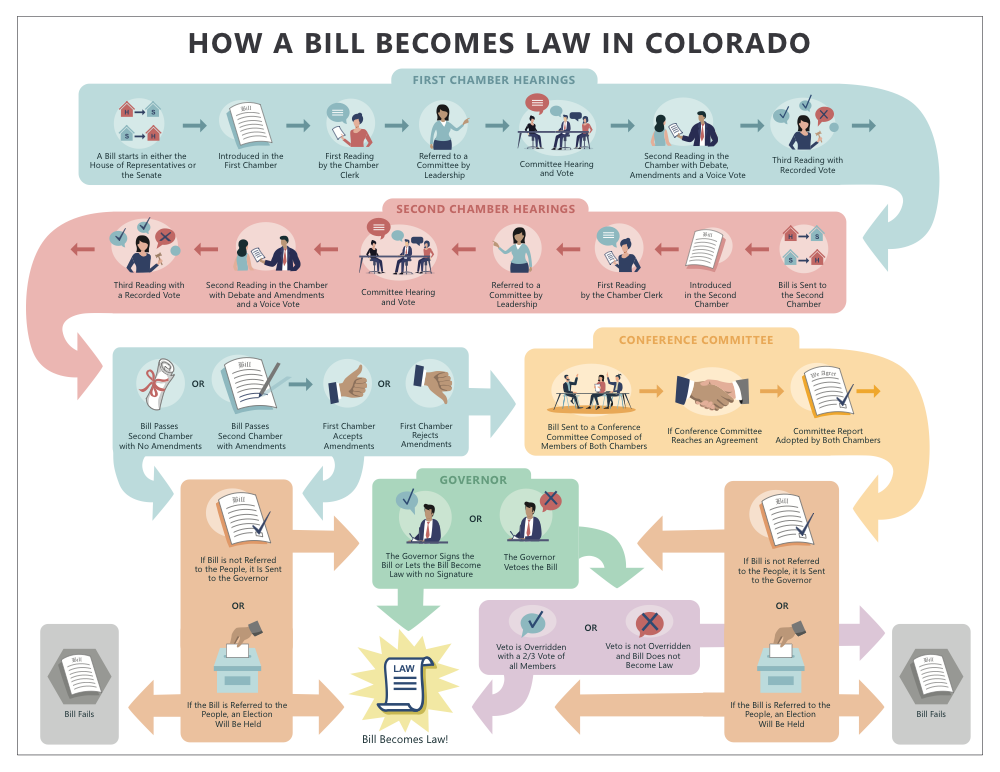
A visual guide to the Colorado legislative process — from introduction in the first chamber through committee hearings, readings, second chamber hearings, conference committee, and the Governor’s signature.