Publications
Books and publications on sex offense law reform, the registry system, and resources for affected individuals and families.
Books and publications exploring the realities of sex offense laws, the registry system, and pathways to reform. These resources offer research-based perspectives from authors, advocates, and those directly affected.
Books
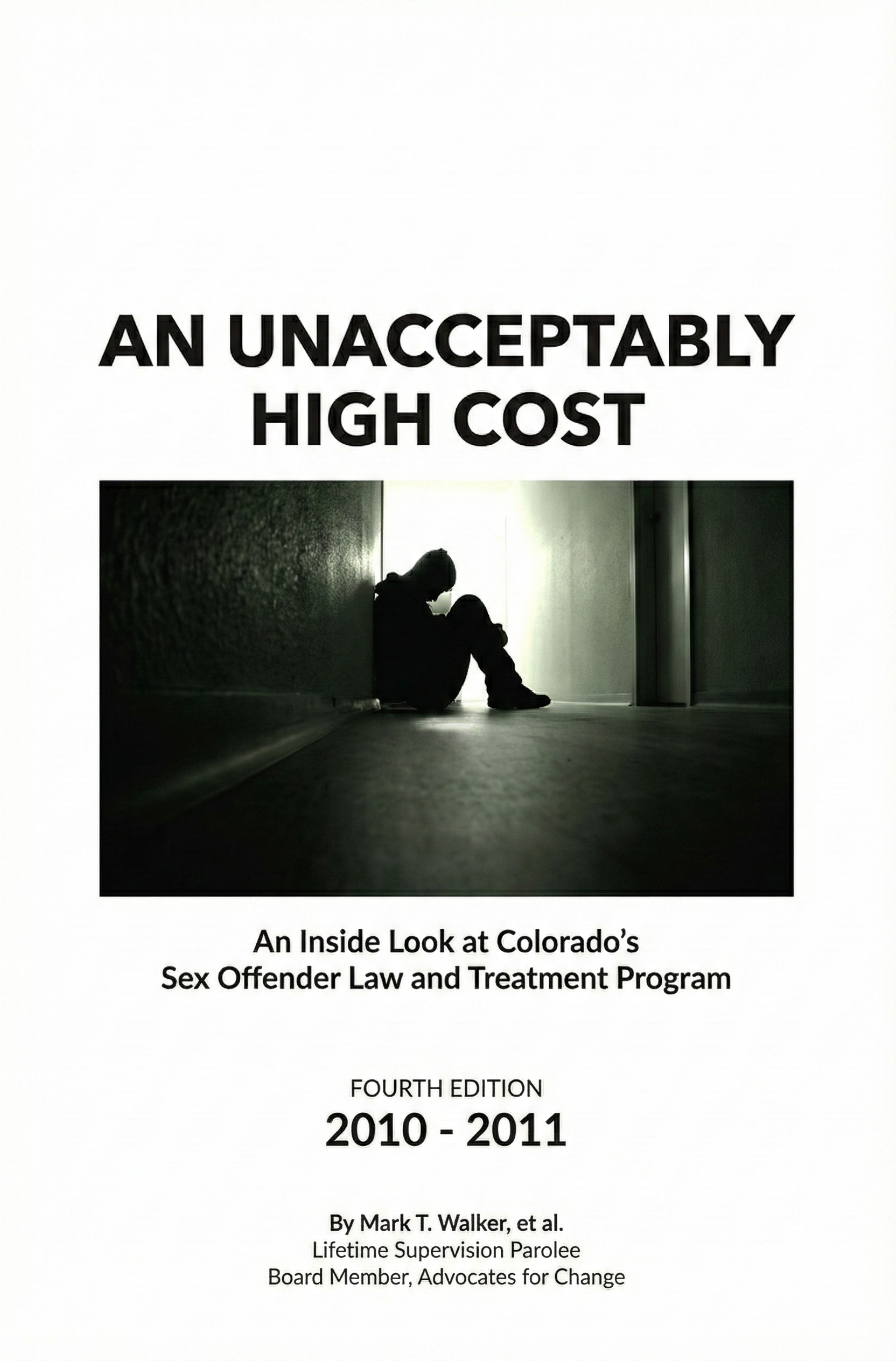
An Unacceptably High Cost: An Inside Look at Colorado’s Sex Offender Law and Treatment Program
Published by: Advocates for Change (AFC)
A comprehensive examination of Colorado’s sex offender laws and treatment programs, exploring the real-world impact on individuals, families, and communities. This AFC publication details how the current system operates, its costs — both human and financial — and where reform is needed most.
Publication details coming soon. Check back for availability.
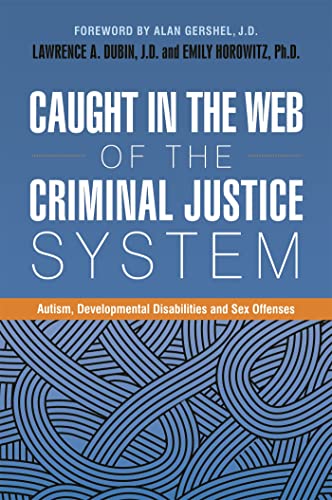
Caught in the Web of the Criminal Justice System: Autism, Developmental Disabilities, and Sex Offenses
Authors: Lawrence A. Dubin, J.D. & Emily Horowitz, Ph.D.
Publisher: Jessica Kingsley Publishers, 2017 • ISBN: 978-1785927133
Investigates the consequences of public hysteria over sex offenses, highlighting the judicial failure to protect defendants with developmental disabilities in the context of the unjust and hyper-punishment of all those charged with sex offenses. Proposes a new way forward based on research and evidence-based sentencing, and elimination of the sex offender registry.

Your Life on “The List” — 2025 Edition
Author: Derek W. Logue, OnceFallen.com
Publisher: Reformation Publishers • ISBN: 978-1643389141
The definitive survival guide for individuals facing inclusion on the public sex offense registry. Contains practical information on primary needs for those newly added to the registry, housing resources, and an exhaustive 50-state and U.S. territory summary of post-conviction sex offense laws including registration and community notification requirements.
Colorado Works Handbook: Advocate for Yourself and Your Family
Published by: All Families Deserve a Chance (AFDC) Coalition & Colorado Center on Law and Policy (CCLP)
A practical guide to Colorado’s TANF (Temporary Assistance for Needy Families) program, known as Colorado Works. Covers eligibility, benefits, work requirements, supportive services, and how to advocate for yourself and your family when navigating the public assistance system.
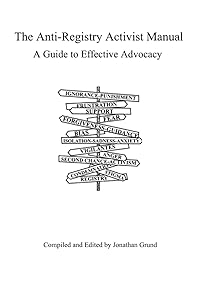
The Anti-Registry Activist Manual: A Guide to Effective Advocacy
A teaching and reference handbook for those who are new to advocacy around sex offense registry reform. Covers strategies, messaging, coalition-building, and practical steps for effective activism.

The Road to Freedom, 4th Edition
Authors: Jill Levenson, Ph.D. & John Morin, Ph.D.
A comprehensive workbook covering key treatment components including accepting responsibility, managing behavior, understanding victim impact, building relationship skills, and relapse prevention. Integrates the strengths-based “Good Lives” model with exercises throughout each chapter.
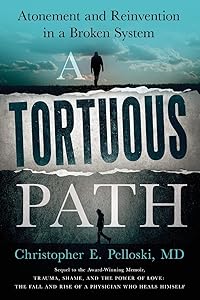
A Tortuous Path: Atonement and Reinvention in a Broken System
Author: Christopher Pelloski
A sequel memoir chronicling the author’s journey through federal incarceration, halfway house detention, probation, and rebuilding his life. Combines humor and pathos with a measured critique of the criminal justice system and its impact on those caught within it.
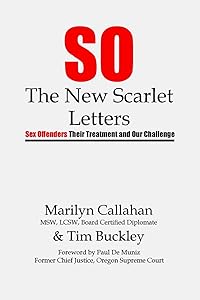
S.O. The New Scarlet Letters: Sex Offenders, Their Treatment and Our Challenge
Addresses the modern stigma surrounding sex offenses through historical and contemporary perspectives. Offers insights for individuals on the registry, their families, agencies, treatment professionals, survivors, and lawmakers on building fairer and more effective policies.
Protecting Our Kids? How Sex Offender Laws Are Failing Us
Analyzes the social, political, and cultural contexts behind sex offense policies. Uses research and data to demonstrate how current laws are often ineffective at protecting children and instead promote fear rather than evidence-based safety measures.
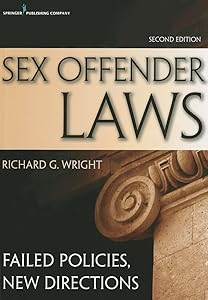
Sex Offender Laws, Second Edition: Failed Policies, New Directions
The most comprehensive book available about sex offense policies and their efficacy. Updated with content on adolescent offenders, recidivism prevention, and evidence-based research across psychology, social work, criminal justice, and law.
Flyers
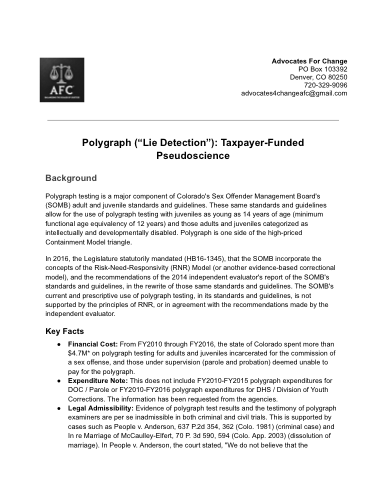
Polygraph (“Lie Detection”): Taxpayer-Funded Pseudoscience
Published by: Advocates for Change (AFC)
An AFC fact sheet examining the use of polygraph testing in Colorado’s sex offender management system. Highlights key issues including the $4.7 million spent on polygraph testing from FY2010–FY2016, the per se legal inadmissibility of polygraph results in Colorado courts, and the conflict between polygraph use and the evidence-based Risk-Need-Responsivity (RNR) model mandated by the Legislature.
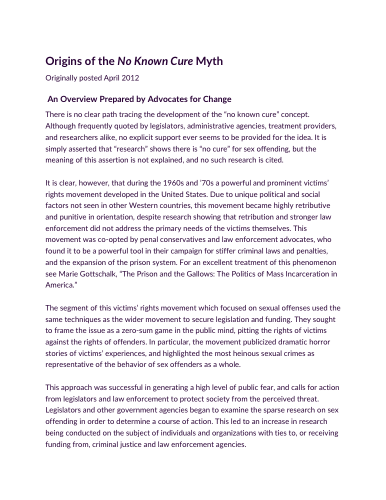
Origins of the “No Known Cure” Myth
Published by: Advocates for Change (AFC)
An AFC overview tracing the origins of the widely repeated claim that there is “no known cure” for sex offending. Examines how this unsupported assertion became embedded in legislation and policy despite lacking cited research, and how the retributive victims’ rights movement and penal conservatives co-opted the narrative to expand punitive laws and the prison system.
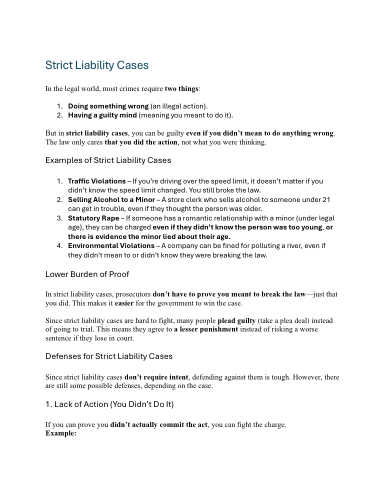
Strict Liability Cases
Published by: Advocates for Change (AFC)
An accessible overview of strict liability in criminal law — cases where guilt does not require intent. Covers examples including statutory rape, traffic violations, and environmental offenses, explains the lower burden of proof, why plea deals are common, and available defenses.
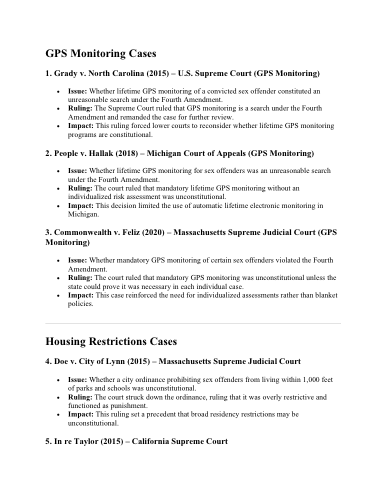
Key Court Cases: GPS Monitoring, Housing Restrictions, and Registry Challenges
Published by: Advocates for Change (AFC)
A compilation of landmark court cases addressing the constitutionality of sex offender laws. Covers GPS monitoring rulings (Grady v. North Carolina, People v. Hallak), housing restriction challenges (Doe v. City of Lynn), and registry-related cases that have shaped the legal landscape.
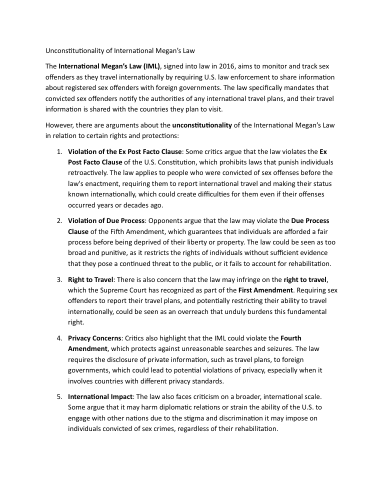
Unconstitutionality of International Megan’s Law
Published by: Advocates for Change (AFC)
Examines the constitutional challenges to the International Megan’s Law (IML), signed in 2016, which requires registered individuals to notify authorities of international travel plans. Addresses arguments including violations of the Ex Post Facto Clause, Due Process, and the right to travel.
Person First Language
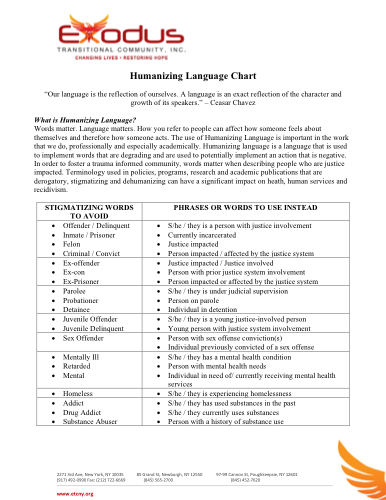
Humanizing Language Chart
Published by: Exodus Transitional Community, New York, NY
A quick-reference chart contrasting stigmatizing words to avoid — such as “offender,” “inmate,” “felon,” and “sex offender” — with person-first alternatives. Grounded in trauma-informed principles, the chart emphasizes that how we refer to people affects how they feel about themselves and how they are treated by others.
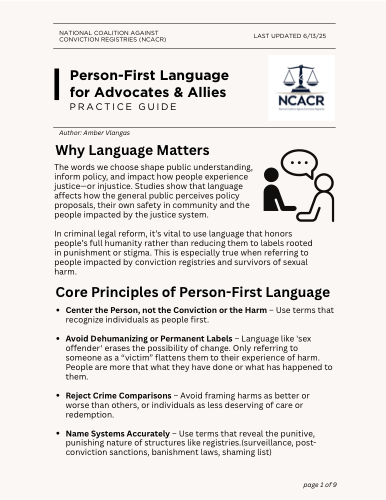
Person-First Language Guide for Criminal Legal Reform Advocates
Author: Amber Vlangas • Published by: National Coalition Against Conviction Registries (NCACR)
A comprehensive 9-page practice guide for advocates and allies. Covers core principles of person-first language, why language matters in shaping public understanding and policy, and provides specific guidance on terminology for people impacted by conviction registries and survivors of sexual harm. Emphasizes centering the person over the conviction, avoiding dehumanizing labels, and naming systems accurately.